
Glossary of Terms Used in This Course
Problem? Question? Something not working on the site? Email me: jchisholm@csum.edu
Course Home & Discussion Readings/Media
Day 9
Alternatives to Rationalism: Feminist Ethics and Postmodern Ethics
Video: Alternative Paradigms: Care Ethics & Feminist Ethics (6m)
Video: Short-Termism, Meta-Narratives and the History Manifesto (10m)
Video: Philosophy: Jacques Derrida (10m)
Video: The Problem with Irony (10m)
Video: Mo Gawdat, “AI’s Biggest Threat Isn’t Technology–It’s Us” (17m)
Day 7 & 8
Rationalism, Part II:
Deontologism & Virtue Ethics

Here’s a video that deftly handles the major aspects of Kant’s ideas about ethics, with some biographical info, too.
Video: A Robot with Deontological Values
There is a runaway trolley barreling down the railway tracks. Ahead, on the tracks, there are five people tied up and unable to move. The trolley is headed straight for them. You are standing some distance off in the train yard, next to a lever. If you pull this lever, the trolley will switch to a different set of tracks. However, you notice that there is one person on the side track.
You have two (and only two) options:
- Do nothing, in which case the trolley will kill the five people on the main track.
- Pull the lever, diverting the trolley onto the side track where it will kill one person.
What if:
- The one person on the tracks is your child?
- There’s no switch, but you can push a car onto the tracks with a lone driver inside?
Day Five & Six
Rationalism, Part I: Utilitarianism, Egoism, Contractarianism

the ultimate rationalist

Ayn Rand, 1905-1982, radical egoist On Egoism: “At their core, Rand’s philosophies suggest that it’s O.K. to be selfish, greedy, and self-interested, especially in business, and that a win-at-all-costs mentality is just the price of changing the norms of society. As one start-up founder recently told me, “They should retitle her books It’s O.K. to Be a Sociopath!” And yet most tech entrepreneurs and engineers appear to live by one of Rand’s defining mantras: The question isn’t who is going to let me; it’s who is going to stop me.” Nick Bilton, “Silicon Valley’s Most Disturbing Obsession,” Vanity Fair, 10/25/2016
Day Five: Monday, June 8
Dilemma
An enormous rock falls and blocks the exit of a cave you and five other tourists have been exploring. Fortunately, you spot a hole elsewhere and decide to let “Big Jack” out first. But Big Jack, a man of generous proportions, gets stuck in the hole. He cannot be moved and there is no other way out.
The high tide is rising and, unless you get out soon, everyone but Big Jack (whose head is sticking out of the cave) will inevitably drown. Searching through your backpack, you find a stick of dynamite. It will not move the rock, but will certainly blast Big Jack out of the hole. Big Jack, anticipating your thoughts, pleads for his life. He does not want to die, but neither do you and your four companions. Should you blast Big Jack out? (taken from BBC News)
- What is the ethical situation?
- What stands to be gained or lost in this situation?
- Who are the potential winners and losers?
- How would the different sides of the argument argue that their position is the “right” or “moral” one?
- Would the situation change if “Big Jack” were a woman? Or a pregnant woman? Or a child?
- Is it more important that the most people get out of the cave (consequentialism), or that whatever choice made is ethical (deontologism)?
Day Four
Thursday, June 4: Revelatory Ethics: Hinduism, Confucianism, Taoism and Buddhism
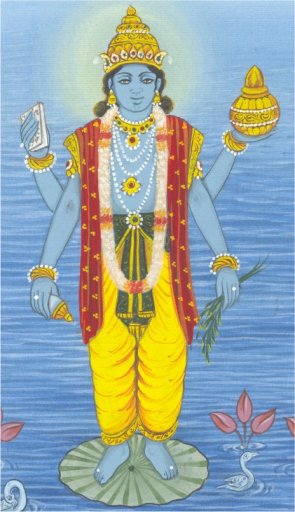
Dhanvantri, the Hindu God of Ayurveda (Health)
A detail from a miniature painting in the Rajastani style, made by the artist LaLa in Udipur.
The original uploader was F16 at Hebrew Wikipedia., CC BY-SA 3.0 http://creativecommons.org/licenses/by-sa/3.0/, via Wikimedia CommonsHere’s a recording of a healing mantra (chant) to Dhanvantari. When chanted it is said by some to heal the coronavirus, or anything that ails one.
Hinumisia.ai, an AI that tracks text-based incidents of “Hinduphobia”
See a list of Hindu deities here!
Article: “Robot Priests Can Bless You, Advise You, Even Perform Your Funeral,” Sigal Samuel, Vox, 1/13/20

The Vinegar Tasters (L-R Confucius, The Buddha, Lao Tzu), unknown, Public Domain article: “How Confucius Loses Face in China’s New Surveillance Regime,” Philip Ivanhoe, aeon.com, 1/17/20

Tower of Babel, by Lucas van Valckenborch, 1594, Louvre Museum Day Three
Wednesday, June 3: Revelatory Ethics (Abrahamic Religions)
Song: “Biblical Love,” a gospel song generated by AI, sung by “JC”
Chart: Comparison of Abrahamic Religions (Reddit)
Video: “Artificial Intelligence and the Tower of Babel,” the C.S. Lewis Institute
Video: Walt Disney, The Sorcerer’s Apprentice, 1940 (Golem)
The Commandments or Prohibitions in Islam, from Al Islam.org
Article: “AI’s Islamophobia Problem,” Vox, 9/18/21

Cyborg (Midjourney) Day Two
Tuesday, June 3: Artificial Intelligence and Ethics
Ethical Decision Making (Markkula Ethics Center, Santa Clara University)
Media Bias Chart, Adfontes
Videos: What is AI and this: Stunning AI shows how it would kill 90% (YouTube)
Today’s article: “AI-Generated Art Won A Prize. Artists Aren’t Happy,” New York Times, 9/2/22
Q: Is it morally wrong to use AI to generate art and then expect it to have the same creative status as an original painting? Why or why not?

Haiphong in 10 years (Midjourney) 
Haiphong in 50 years 
Haiphong in 100 years Day One
Monday, June 2: Welcome!
I’m Dr. Chisholm (pronounced CHIZZ-um). You can call me “Dr. C.” Here’s a short video in which I introduce myself:
Please make sure to subscribe to this site!
Important links are listed in the left margin of this page: first is the course syllabus, which is obviously full of important information.
Under this is a link to a glossary of mostly philosophical terms. I’ll be throwing these around a lot; plus, they’re pretty great words to know, in general. When these words appear on this site, I will highlight them.


“Let this grisly beginning be none other to you than is to wayfarers a rugged and steep mountain.”
― Giovanni Boccaccio, The Decameron